
Sociology is the study of society, social relationships, institutions, communities, groups, norms, values, and the processes through which collective life is organised and transformed. It seeks to understand how individuals relate to families, communities, institutions, economies, political structures, and cultural traditions, while examining patterns of continuity, change, cohesion, and conflict. An Indic approach to sociology further asks how social life has been understood through Bharatiya categories, institutions, lived traditions, and relationships between the individual, family, community, society, and wider civilizational order.
Sociology
Interrogating Sociology
1. What exactly are we teaching as “Sociology” today? Syllabus and analysis of school-level social studies, BA/BSW Sociology, MA/MSc Sociology, and major sociological subfields
2. Whose theories are we using to understand society? Indian Sociological Theories and Frameworks, Western Sociological Theories and Frameworks
3. Whose thinkers are we reading? Indic Sociologists and Thinkers, Westernized Sociologists and Thinkers
4. What are the sources of our sociological knowledge? Indian Sources of Sociological Knowledge, Western Sources of Sociological Knowledge
5. Whose societies and social experiences are we studying? Indian Communities, Societies and Civilizational Experiences, Western Communities, Societies and Social Experiences
6. How are we studying society? Indian Approaches to Understanding Society, Western Sociological Methods and Approaches
Decolonizing Sociology
Articles examining the colonial assumptions, categories, theories, methodologies, and curricula through which Sociology has been conventionally developed and taught. This section re-examines these inherited frameworks in relation to Bharat’s own social institutions, traditions, communities, and historical experience.
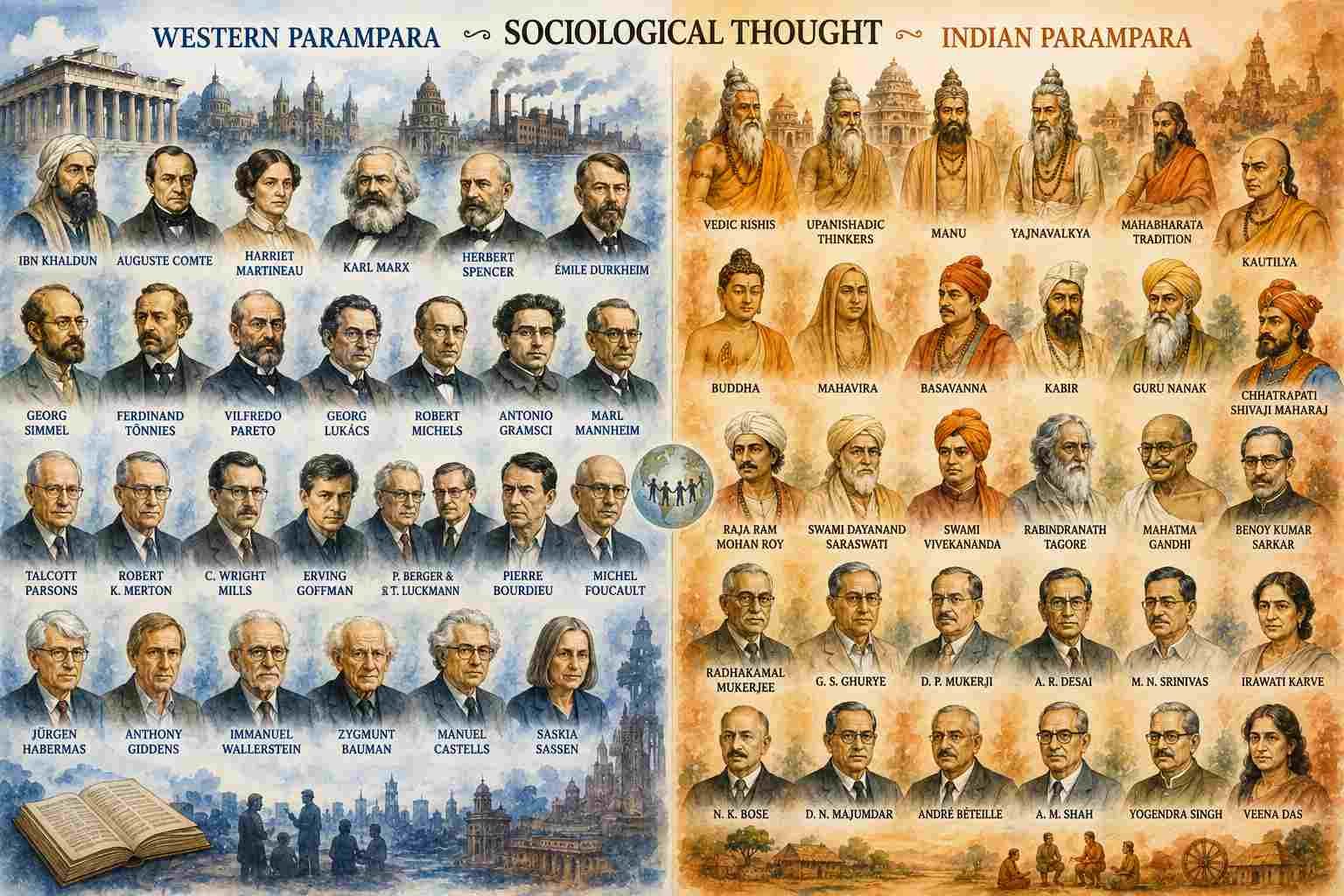
Sociology Thinkers: Western and Indian
Sociology Thinkers: Western and Indian
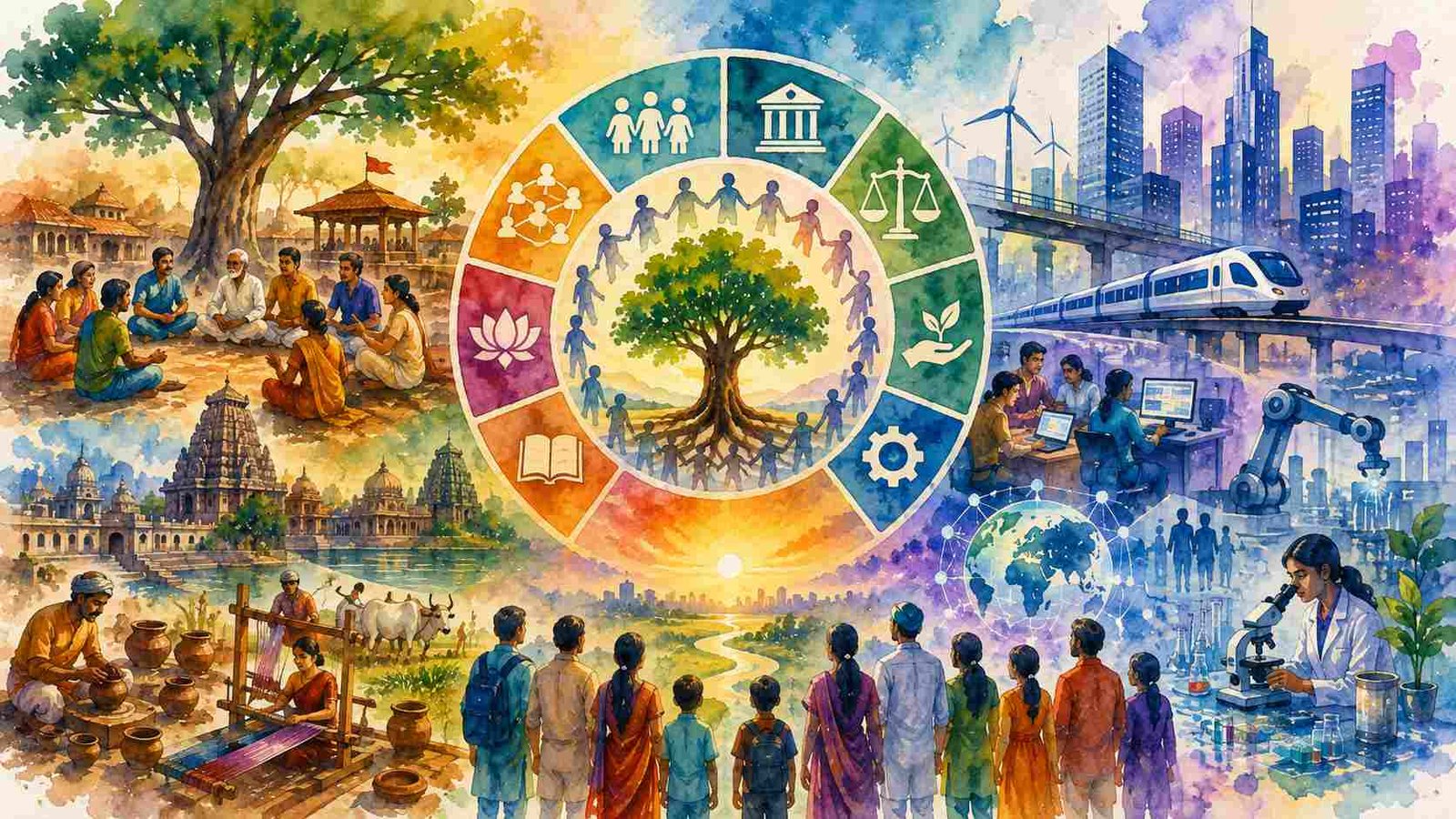
Whose Modernity?
Whose Modernity?
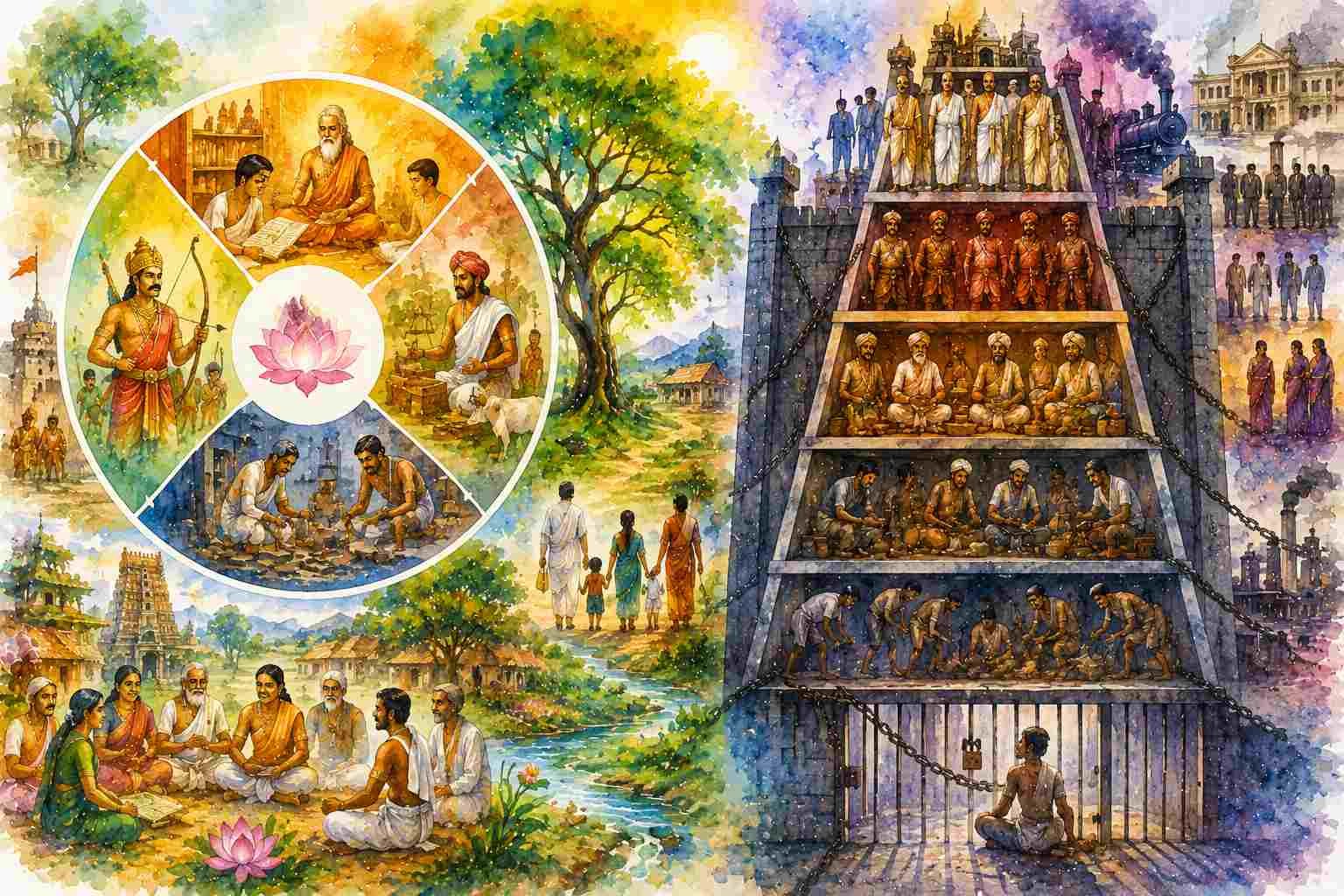
From Caste to Jati
From Caste to Jati
Samājika Dṛṣṭi
A space for exploring society through broader Indic understandings of social relationships, institutions, community, duty, cohesion, and collective life. It moves beyond syllabus-bound sociology to develop new questions and conceptual approaches rooted in Bharat’s social experience.
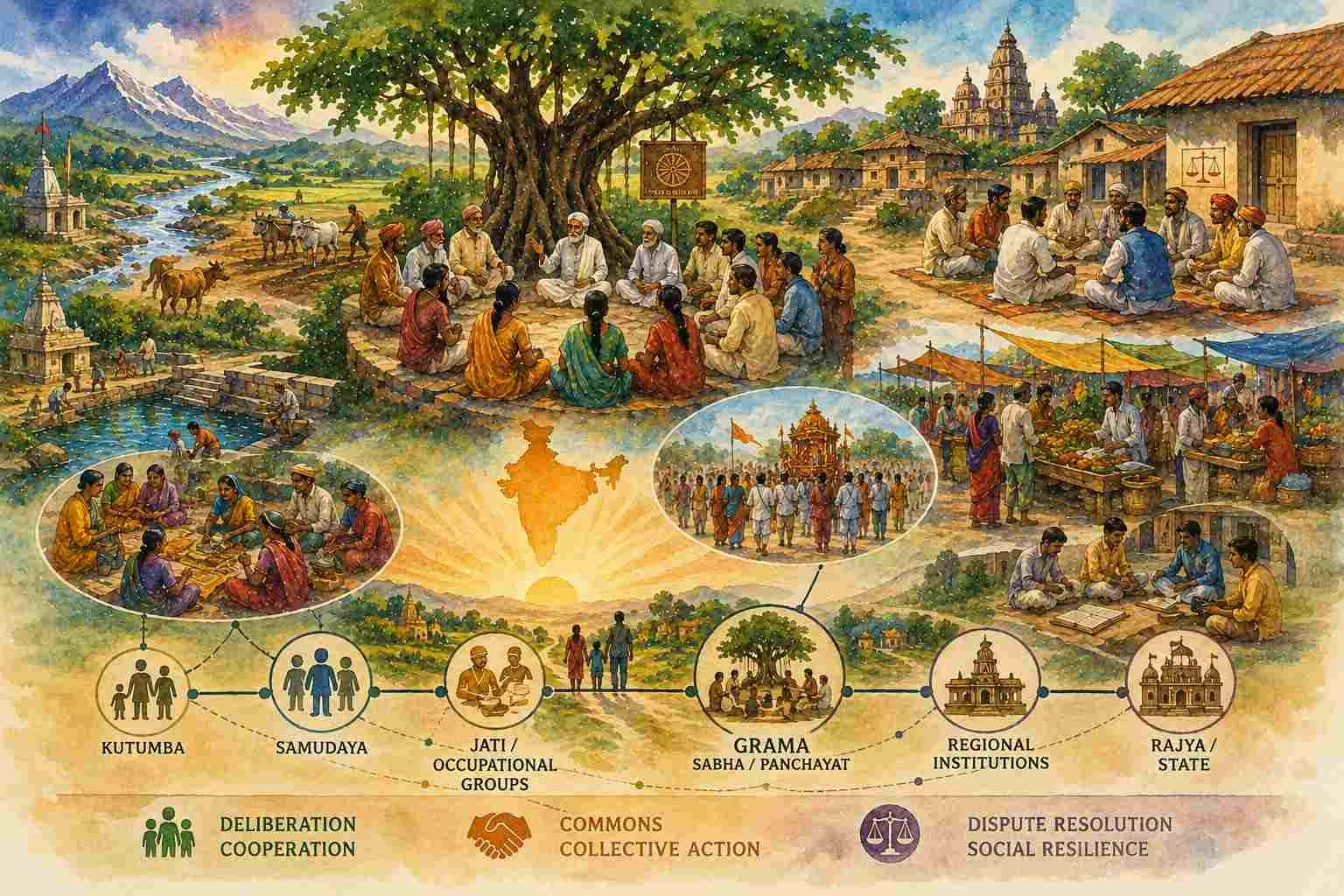
Grama, Sabha and Samudaya
Grama, Sabha and Samudaya
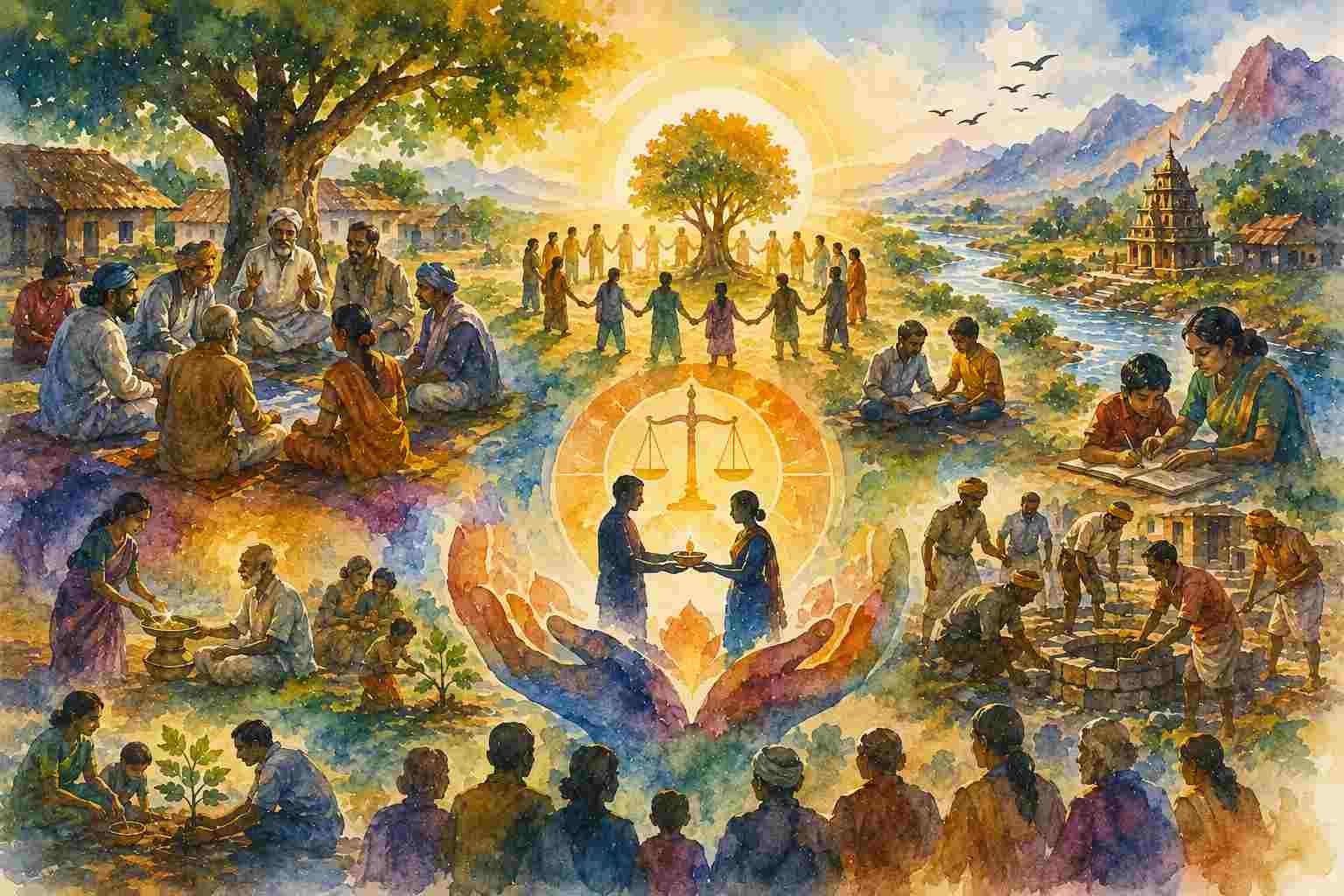
Dharma and Social Order
Dharma and Social Order
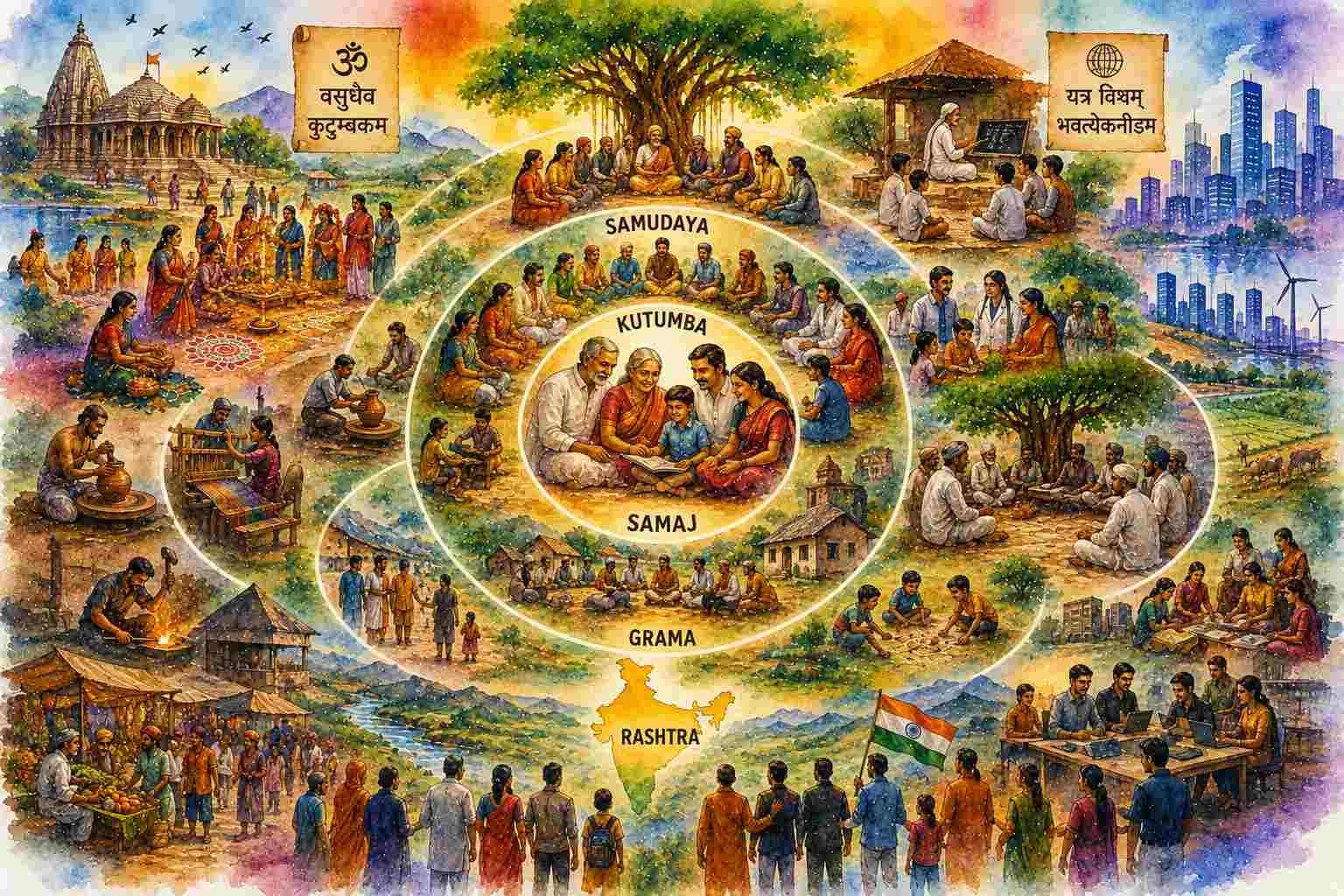
Samaj: An Indic Sociology of Collective Life
