
Economics is the study of how individuals, households, communities, institutions, and states organise the production, distribution, exchange, and use of resources to sustain human life and pursue prosperity. It examines markets, labour, wealth, consumption, trade, property, production, institutions, inequality, and the choices through which societies manage material resources. An Indic approach to Economics further asks how Artha, Dharma, Dana, Shreni, Svadeshi, Lokasangraha, and the Purusharthas shaped Bharatiya understandings of wealth, livelihood, exchange, responsibility, prosperity, and the ethical relationship between material well-being and the wider social and civilizational order.
Economics and Management
Interrogating Economics
1. What exactly are we teaching as “Economics and Management” today? Syllabus and analysis of school-level Economics and Social Studies, undergraduate and postgraduate Economics, BBA/BMS, MBA/PGDM, and major fields and subfields of Economics and Management
2. Whose theories and frameworks are we using to understand the economy, organisations and management? Indian Economic and Management Theories and Frameworks, Western Economic and Management Theories and Frameworks
3. Whose economists, management thinkers and practitioners are we reading? Indic Economists, Economic Thinkers, Management Thinkers and Practitioners, Westernized Economists, Economic Thinkers, Management Thinkers and Practitioners
4. What are the sources of our economic and management knowledge? Indian Sources of Economic and Management Knowledge, Western Sources of Economic and Management Knowledge
5. Whose economic, organisational and enterprise experiences are we studying? Indian Economic, Organisational, Entrepreneurial and Civilizational Experiences, Western Economic, Organisational and Business Experiences
6. How are we studying and understanding the economy, organisations and management? Indian Approaches to Economy, Prosperity, Organisation and Management, Western Economic and Management Methods and Approaches
Decolonizing Economics
Articles examining the colonial assumptions, categories, theories, models, and curricula through which Economics is conventionally studied and taught. This section reconsiders production, exchange, wealth, labour, markets, consumption, and development through Bharat’s own economic traditions and social institutions.
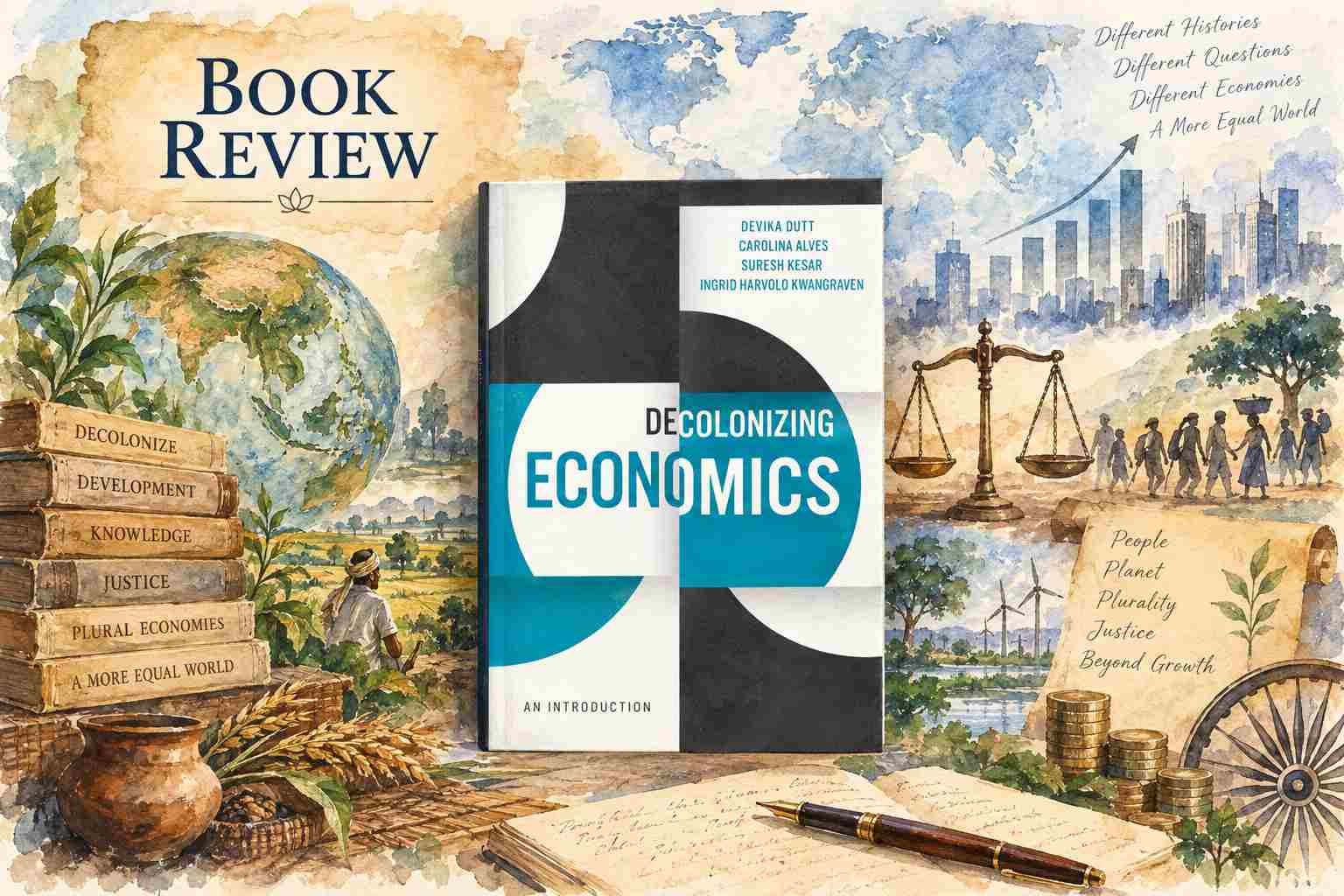
Decolonizing Economics: An Introduction (A Book Review)
Decolonizing Economics: An Introduction (A Book Review)
What Is Development?
What Is Development?
What Is Wealth?
What Is Wealth?
Arthika Dṛṣṭi
A space for exploring economic life through Indic understandings of Artha, Vārtā, Dharma, and Lokasaṅgraha. It moves beyond syllabus-bound Economics to develop broader approaches to wealth, livelihood, markets, resource use, prosperity, and the relationship between economy, society, and culture.
Economic Dṛṣṭi : Wealth, Livelihood and the Moral Organisation of Economic Life (G C Pande)
Economic Dṛṣṭi : Wealth, Livelihood and the Moral Organisation of Economic Life (G C Pande)
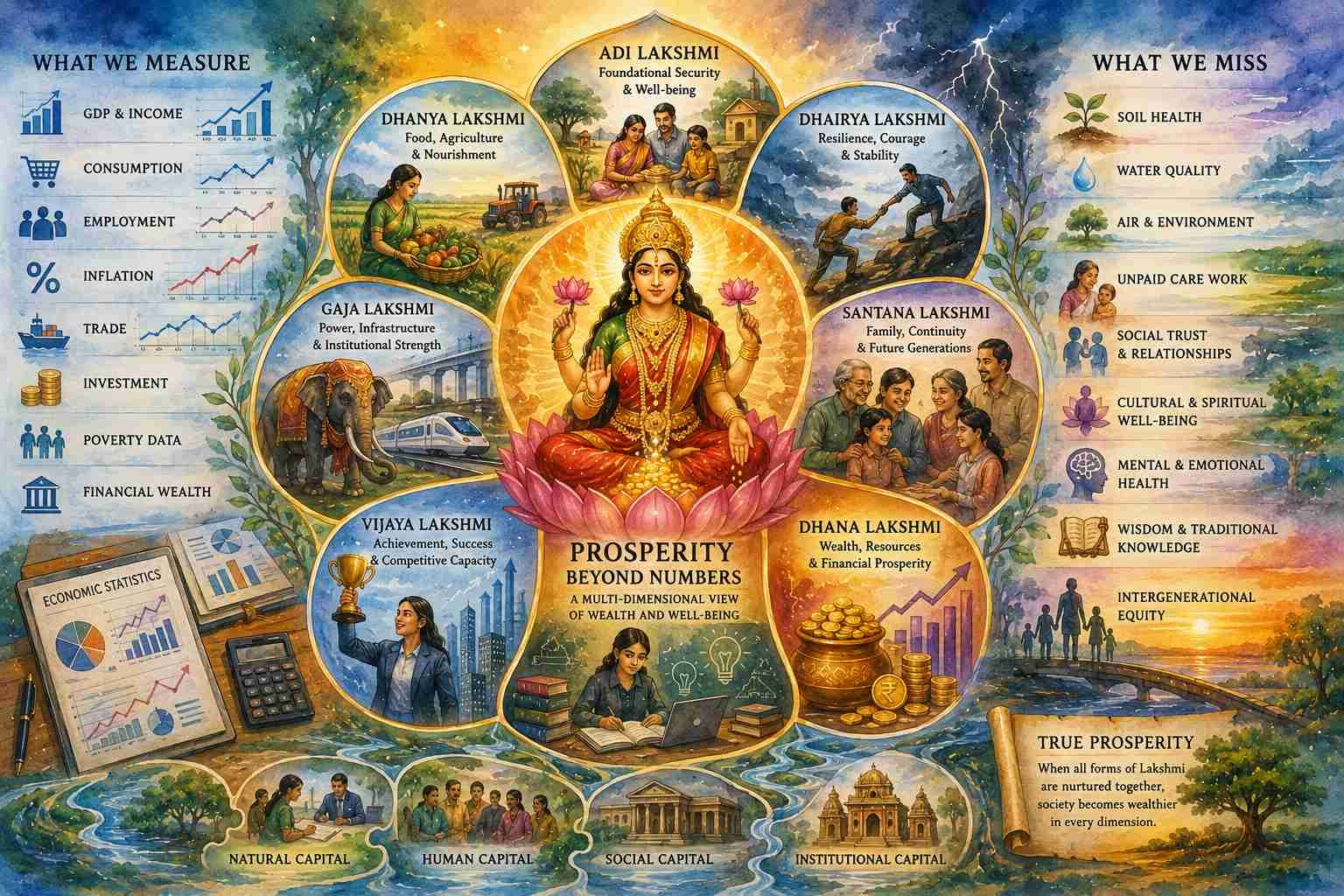
Ashtalakshmi and the Economics of Prosperity
Ashtalakshmi and the Economics of Prosperity
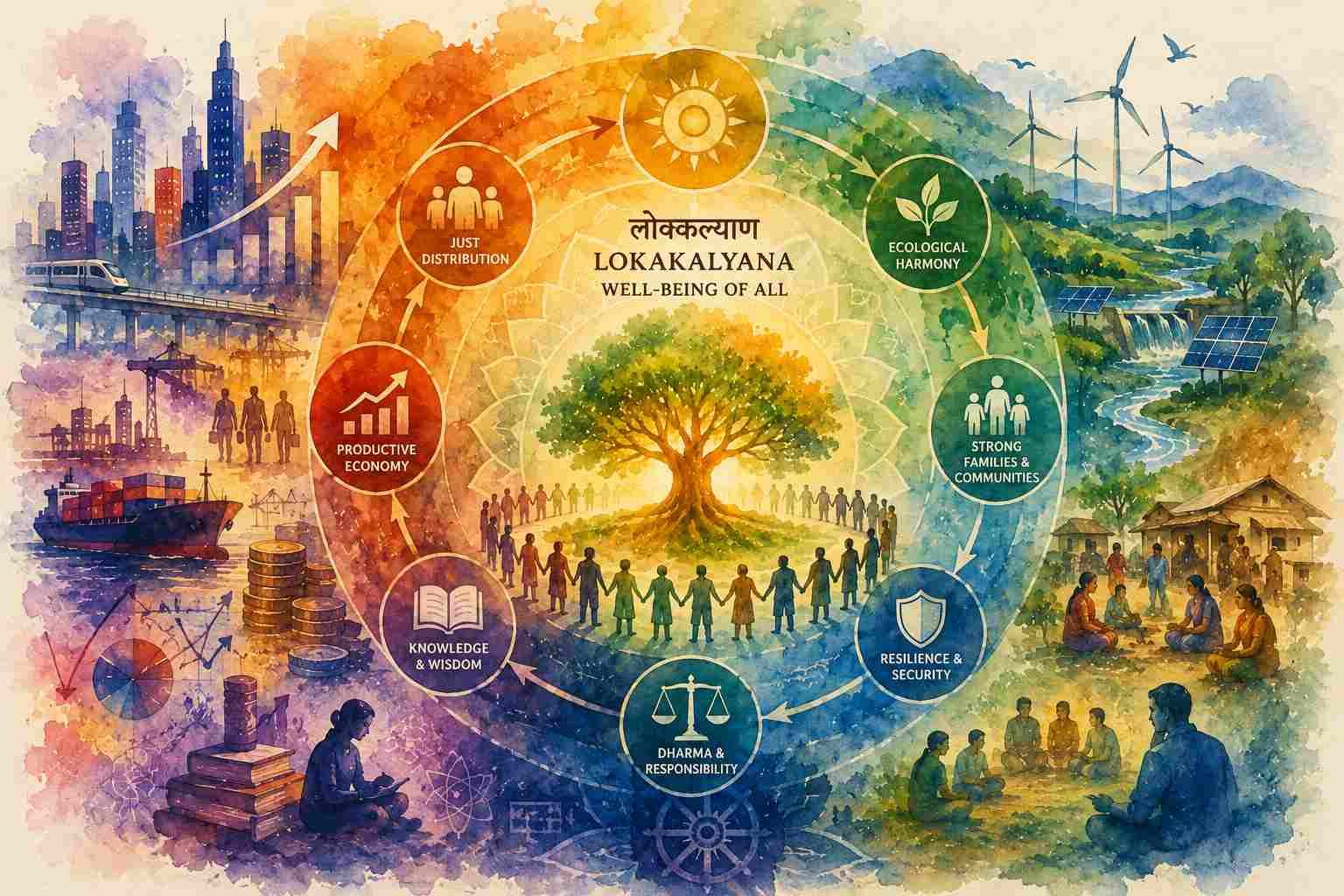
Lokakalyana: What Makes an Economy Prosperous?
