An Introduction to “India Through Hindu Categories” | Indic Social Studies Series
(Yet to be Published)
Series: An Indic Social Studies Series
Published by: Centre for Indic Studies, Indus University
Author (Original Work): McKim Marriott
Access: Open Educational Resource / Free Academic Publication (Non-Commercial)
About the Booklet
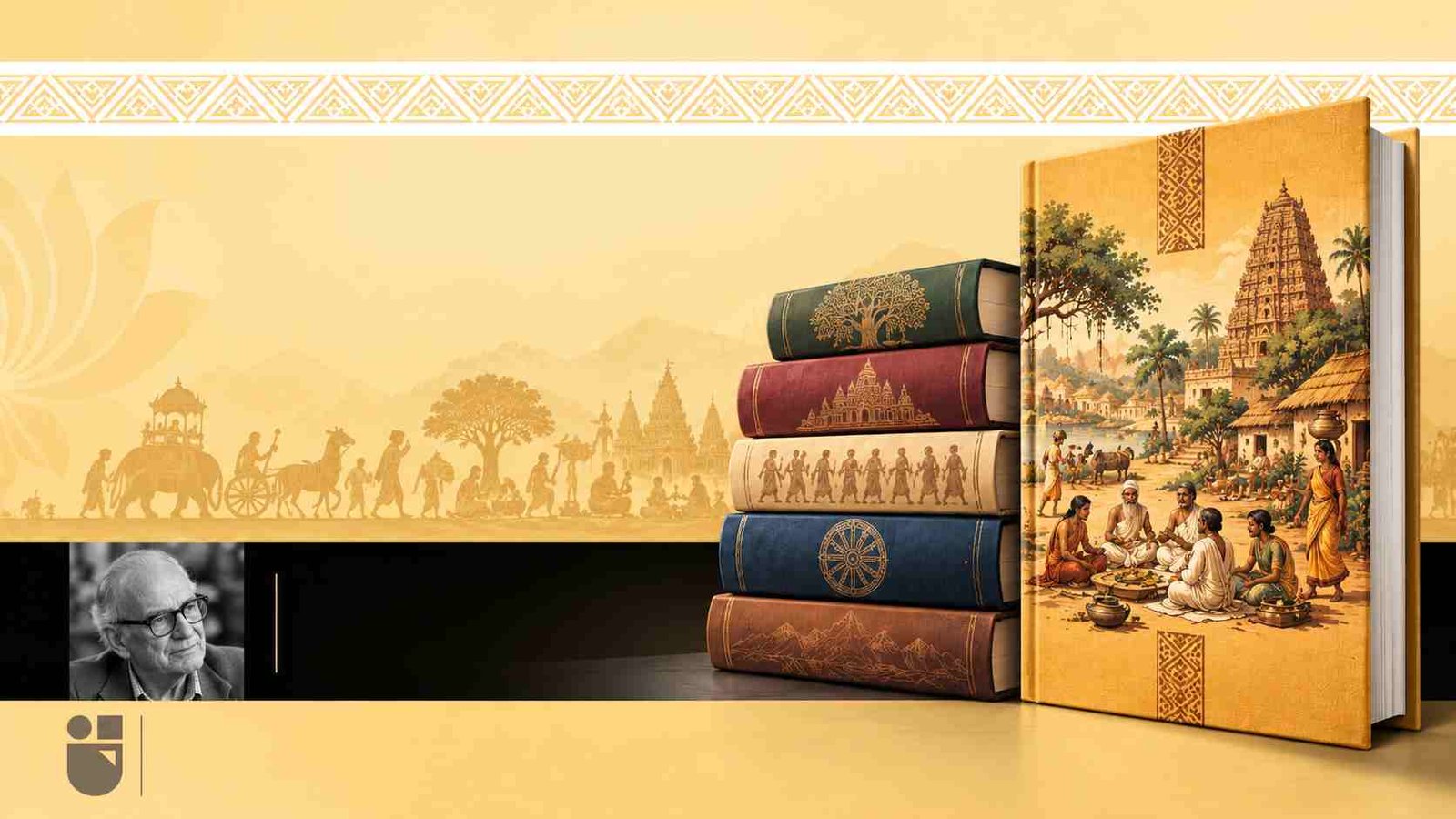
As part of the Indic Social Studies Series published by the Centre for Indic Studies, Indus University, this educational booklet introduces readers to the important anthropological work of McKim Marriott, particularly his attempt to understand Indian society through categories that emerge from Hindu social and cultural practices.
India Through Hindu Categories is significant because it raises a fundamental methodological question for the study of Indian society: should Indian social life always be explained through concepts developed outside the society being studied, or can the categories used by the people themselves provide the starting point for social analysis?
The booklet introduces students and researchers to Marriott’s engagement with Indian social thought and his effort to understand social relationships, exchange, hierarchy, identity and community through concepts and distinctions found within Hindu society.
What’s Inside This Booklet?
1. Understanding India Through Its Own Categories
The booklet introduces Marriott’s central methodological concern: the importance of understanding Indian society through categories that are meaningful within the Indian cultural context.
2. The Idea of Indigenous Categories
The work examines how concepts and classifications found within Indian society can provide alternative ways of understanding social relationships, identity and institutions.
3. Exchange, Reciprocity and Social Relationships
Particular attention is given to the ways in which relationships in Indian society can be understood through patterns of exchange, reciprocity, obligation and social interaction.
4. Hierarchy and Social Organisation
The booklet explores Marriott’s observations on caste, community, hierarchy and social relationships, and how these may be understood through indigenous distinctions rather than through a single universal model of social organisation.
5. From Anthropology of India to Indic Social Studies
The work provides an important starting point for a broader methodological discussion: what changes when the categories of the society itself become part of the analytical framework?
Primary Goals
- Introduce Indigenous Categories: Familiarise students with the possibility of studying Indian society through concepts that emerge from Indian social and cultural practices.
- Revisit Anthropological Methodology: Examine the methodological implications of studying a society through its own categories.
- Encourage Reflexive Social Science: Encourage researchers to question whether analytical categories developed elsewhere adequately capture Indian social realities.
- Understand Indian Social Relations: Explore ideas of exchange, reciprocity, hierarchy, identity and community in the Indian context.
- Contribute to Indic Social Studies: Use Marriott’s work as an entry point for a larger conversation on developing approaches to social science that take Indic categories seriously.
Key Topics Covered
- Hindu Categories and Social Organisation
- Indigenous Categories in Anthropology
- Exchange and Reciprocity
- Hierarchy and Social Relationships
- Caste and Community
- Cultural Classification and Social Reality
- Anthropological Approaches to India
- The Possibility of Indigenous Social Science Categories
Why This Booklet?
The importance of India Through Hindu Categories lies not simply in the particular conclusions reached by Marriott, but in the methodological question it opens.
What happens when we stop looking at Indian society only through categories created outside India and begin by asking how Indian society itself understands its relationships, institutions and social world?
For the Indic Social Studies Series, this makes the work particularly relevant. It provides an opportunity to revisit the relationship between anthropology, indigenous categories and the study of Indian society, while also asking what further possibilities emerge when such categories are developed systematically within an Indic framework.