An Introduction to “Hindu Economics” | Indic Social Studies Series
(Yet to be Published)
Series: An Indic Social Studies Series
Published by: Centre for Indic Studies, Indus University
Original Work: B. K. Bokare — Hindu Economics
Preface by: Dattopant Thengadi
Booklet: Selected excerpts, observations and introductory insights from Hindu Economics
Access: Open Educational Resource / Free Academic Publication (Non-Commercial)
About the Booklet
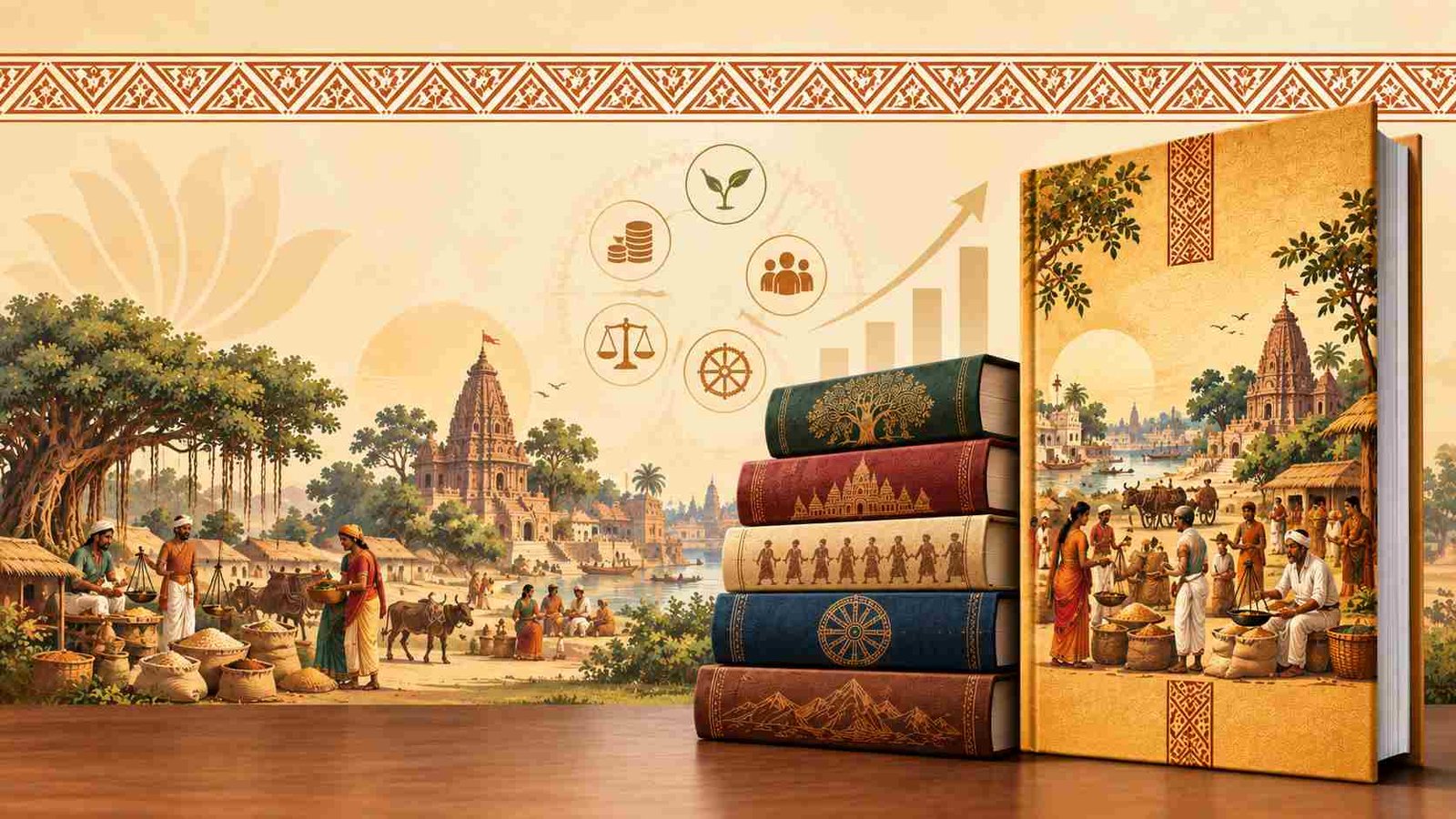
As part of the Indic Social Studies Series published by the Centre for Indic Studies, Indus University, this booklet introduces readers to B. K. Bokare’s Hindu Economics, along with the important preface written by Dattopant Thengadi.
The booklet brings together selected portions of the work and some introductory observations to help readers engage with the larger question of whether economic life can be understood through categories emerging from the Indian intellectual and social tradition.
Rather than treating economics only as a technical study of production, distribution and consumption, Hindu Economics raises questions about the purpose of economic activity, the relationship between wealth and social responsibility, the place of the individual within society, and the relationship between material prosperity and human well-being.
The preface by Dattopant Thengadi adds another important dimension to the discussion by placing the work within the wider debate on developing an economic framework rooted in Indian conditions and civilizational experience.
What’s Inside This Booklet?
1. Selected Excerpts from Hindu Economics
The booklet presents selected portions of B. K. Bokare’s work to introduce readers to its central arguments and observations on economics from a Hindu/Indic perspective.
2. Dattopant Thengadi’s Preface
The preface provides an important introduction to the significance of the work and places the discussion within the broader question of economic thought, society and Indian civilisation.
3. Some Key Insights from the Work
Alongside the excerpts, the booklet identifies and discusses some of the ideas that emerge from the text, particularly those concerning the relationship between economy, society, ethics and human well-being.
4. Rethinking the Purpose of Economics
The work provides an opportunity to ask a basic question: Is an economy merely a mechanism for producing and distributing wealth, or does economic activity also have a social and ethical purpose?
This becomes one of the important questions through which the booklet approaches Hindu Economics.
Primary Goals
- Introduce Indic Economic Thought: Provide an accessible introduction to B. K. Bokare’s attempt to think about economics through Hindu/Indic categories.
- Bring Important Texts into Discussion: Make selected portions and ideas from Hindu Economics accessible to students and researchers.
- Examine the Relationship Between Economy and Society: Explore how economic activity is connected with social institutions, responsibilities and community life.
- Encourage Discussion on Alternative Economic Frameworks: Use the work as a starting point for examining whether economic thought can be approached through intellectual traditions other than the dominant modern Western framework.
- Connect Economics with Human Well-being: Examine the relationship between material prosperity, social responsibility and broader conceptions of human flourishing.
Key Topics Covered
- Hindu/Indic Approach to Economics
- Purpose and Meaning of Economic Activity
- Wealth and Social Responsibility
- Individual and Society
- Economic Life and Ethical Values
- Production, Consumption and Distribution
- Community and Economic Organisation
- Indian Conditions and Economic Thought
- Dattopant Thengadi’s Reflections on Economic Thought
Why This Booklet?
The significance of Hindu Economics lies in the question it allows us to ask about the foundations of economic thought.
What if economics is not only about how much wealth a society produces, but also about what that wealth is for, how it is produced, how it is distributed, and what kind of society it ultimately creates?
Bokare’s work, together with Thengadi’s preface, provides an entry point into these questions. The booklet therefore does not present Hindu Economics simply as an alternative textbook of economics. Rather, it introduces the work as part of a larger discussion on whether economic concepts themselves can be reconsidered through the social, ethical and cultural categories of the Indian tradition.
This makes the booklet particularly relevant to the broader objective of the Indic Social Studies Series: to revisit established social-science disciplines and examine what becomes possible when Indian intellectual traditions are treated not merely as subjects of study, but also as sources of concepts for analysis.