An Introduction to “Circular Economy” | Indic Social Studies Series
(Yet to be Published)
Series: An Indic Social Studies Series
Published by: Centre for Indic Studies, Indus University
Author (Original Work): Ram Swarup
Booklet: Selected excerpts, observations and introductory insights on Circular Economy
Access: Open Educational Resource / Free Academic Publication (Non-Commercial)
About the Booklet
As part of the Indic Social Studies Series published by the Centre for Indic Studies, Indus University, this educational booklet introduces readers to the ideas of Ram Swarup relevant to questions of economy, consumption, resources and the organisation of economic life.
The booklet brings together selected material and introductory observations to encourage a discussion on an important question: how should an economy relate to nature, resources, production and human needs?
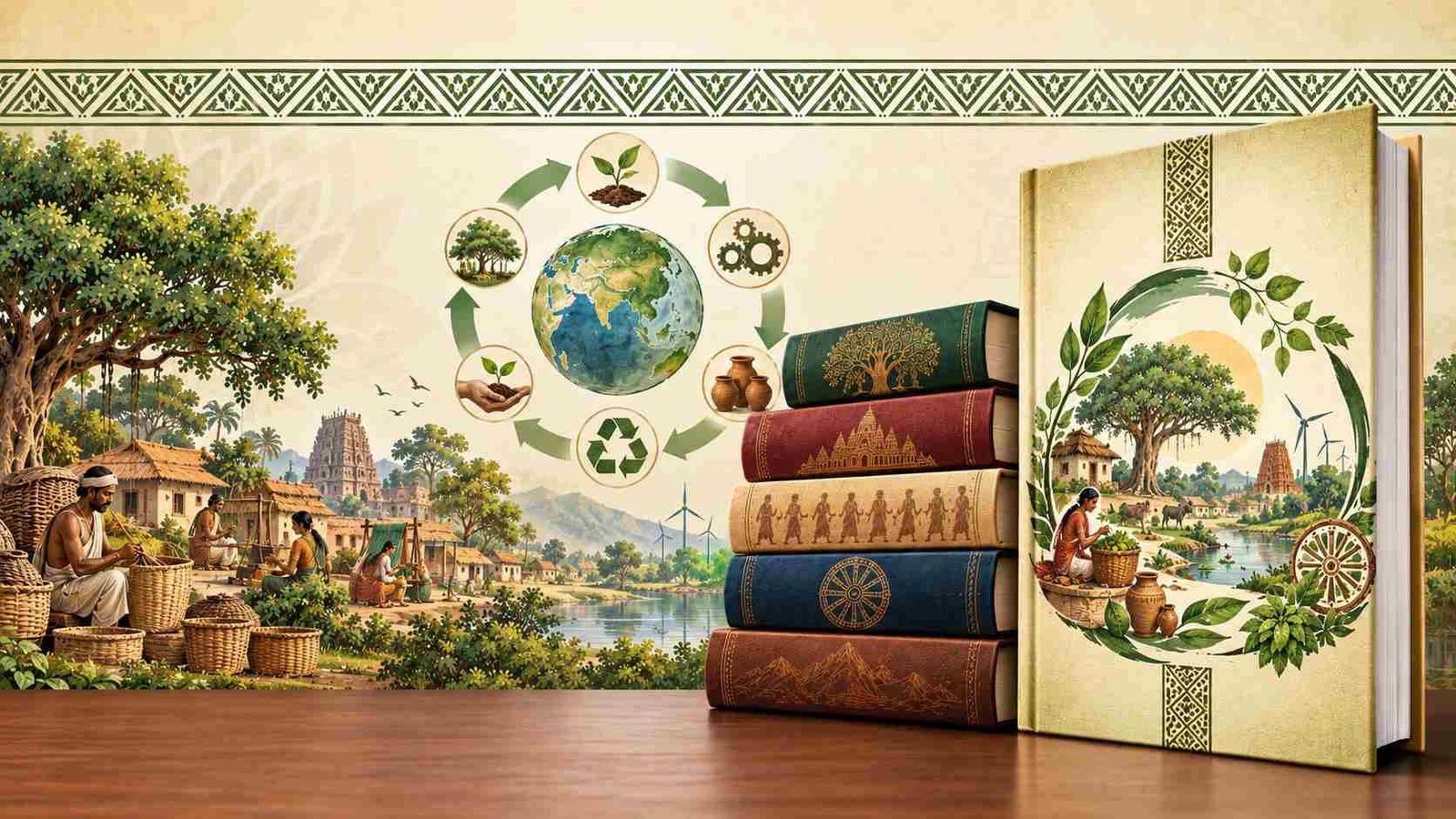
The contemporary idea of a circular economy emphasises reducing waste, extending the life of resources, reusing materials and creating systems in which production and consumption do not simply follow a linear pattern of extraction, production and disposal. This booklet provides an opportunity to examine these questions alongside ideas emerging from the Indian intellectual tradition.
Rather than treating the circular economy only as a contemporary economic or environmental model, the booklet asks whether some of its underlying concerns can be understood through older Indian approaches to restraint, interdependence, resource use, responsibility and balance.
What’s Inside This Booklet?
1. Selected Ideas from Ram Swarup
The booklet presents selected portions and observations from the work of Ram Swarup that can contribute to a discussion on economic organisation, human needs, consumption and the relationship between society and its material environment.
2. Understanding the Idea of a Circular Economy
An introductory discussion of the circular economy and its distinction from a linear economic model based broadly on:
Take → Make → Use → Discard
The booklet considers the possibility of an economic system organised around longer cycles of use, reuse, regeneration and responsibility.
3. Economy, Society and Nature
The relationship between economic activity and the natural environment forms an important part of the discussion. The question is not simply how much an economy can produce, but also how resources are used and what happens to them after production and consumption.
4. Consumption and Restraint
The booklet explores the question of consumption from an Indic perspective and considers whether economic well-being necessarily has to be equated with continually increasing consumption.
5. Towards an Indic Understanding of Sustainability
The discussion opens a broader possibility: whether ideas of balance, restraint, reciprocity and interdependence can contribute to contemporary conversations on sustainable economic systems.
Primary Goals
- Introduce Indic Perspectives on Economy and Resources: Explore economic questions through ideas emerging from the Indian intellectual tradition.
- Understand Circularity Beyond a Technical Model: Examine circular economy not merely as a method of waste management, but as a broader question concerning production, consumption and resource relationships.
- Revisit the Idea of Consumption: Encourage discussion on the relationship between human needs, material prosperity and responsible consumption.
- Connect Economy and Ecology: Examine the relationship between economic activity, natural resources and the long-term sustainability of social life.
- Encourage Further Research: Use the booklet as an entry point for students and researchers interested in developing an Indic perspective on contemporary economic questions.
Key Topics Covered
- Circular Economy and Economic Organisation
- Linear and Circular Models of Production
- Consumption and Human Needs
- Resource Use and Reuse
- Economy and Ecology
- Restraint and Responsible Consumption
- Interdependence and Sustainability
- Indic Perspectives on Economic Life
- The Relationship Between Society, Economy and Nature
Why This Booklet?
The central question behind this booklet is quite simple:
Can an economy continue to grow by constantly taking from nature and discarding what it no longer needs, or must economic life be organised around cycles of renewal, reuse and restraint?
The idea of a circular economy is often presented as a contemporary response to environmental and economic challenges. An Indic reading allows us to ask a further question: are some of the principles underlying this discussion entirely new, or can we find related ways of thinking about resources, consumption, balance and responsibility within Indian traditions?
This booklet therefore attempts to place contemporary discussions on the circular economy alongside Indic reflections on economic life, without treating the two as identical. It is intended as a starting point for further academic inquiry into how Indian categories and intellectual traditions might contribute to present-day debates on economy, sustainability and human well-being.